Aquarium Lighting Explained: A Practical Guide to Finding the Right Light for Every Tank
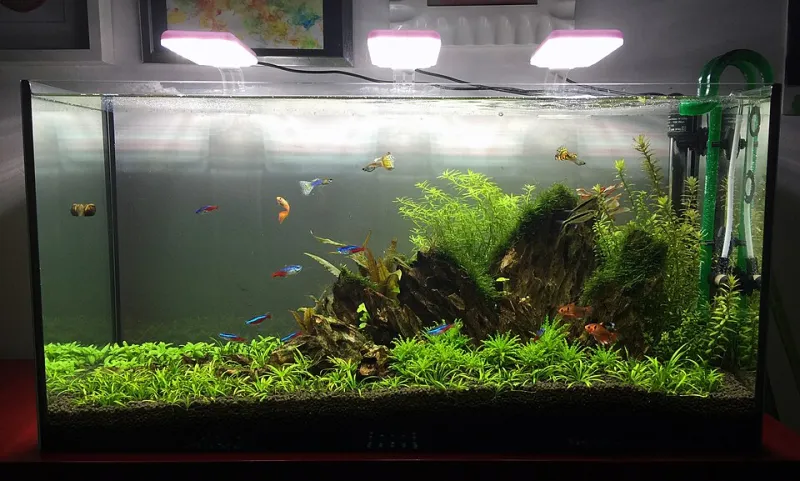
Photo: Gustavo Sivila, CC BY-SA 4.0, via Wikimedia Commons
Few pieces of aquarium equipment generate as much confusion as lighting. Walk into any fish store or browse an online forum and you'll encounter a wall of jargon—PAR, PUR, Kelvin, lumens, photoperiod, spectrum—that can make a seemingly simple purchase feel like a graduate-level physics problem.
Here's the good news: once you understand what each term actually means for your specific tank, the choices get a lot clearer. This guide cuts through the noise by organizing everything around what matters most—your tank type and what you're trying to grow or keep.
The Key Terms You Actually Need to Know
Before diving into specific setups, let's define the terms that come up most often:
PAR (Photosynthetically Active Radiation): Measures the amount of light in the wavelength range (400–700nm) that plants and corals can actually use for photosynthesis. PAR is measured in micromoles per square meter per second (µmol/m²/s). Higher PAR means more photosynthetically useful light reaching your plants or corals.
Color Temperature (Kelvin/K): Describes the "warmth" or "coolness" of white light. Lower Kelvin values (around 3000–4000K) produce warm, yellowish tones. Higher values (10,000K and above) produce the cool, blue-white light common in reef tanks. For planted freshwater tanks, 6500–7000K is widely considered the sweet spot.
Photoperiod: Simply the number of hours your lights are on per day. Most tanks do well with 8–10 hours, though this varies by setup. Consistent photoperiods are important—irregular light schedules stress fish and can trigger algae blooms.
Full Spectrum: A marketing term that gets overused, but ideally refers to a light that covers the full visible spectrum and peaks in the wavelengths most useful for photosynthesis. Look for lights with strong output in the blue (430–470nm) and red (640–680nm) ranges if you're growing plants.
LED vs. Fluorescent vs. Specialty Lighting: The Core Comparison
LED Lighting
LEDs have become the dominant technology in the hobby, and for good reason. Modern aquarium LEDs are energy-efficient, run cool, last for years, and offer a level of spectrum customization that older technologies can't match. Many units allow you to dial in specific color channels, set automated sunrise/sunset cycles, and adjust intensity—all from a smartphone app.
Best for: Almost every setup, from basic community tanks to high-tech planted tanks and reef systems.
Top considerations: Not all LEDs are created equal. Budget LEDs from generic brands often underperform on actual PAR delivery despite impressive-looking spec sheets. Stick with reputable brands like Fluval, Kessil, AI (Aqua Illumination), or Chihiros, and look for real-world PAR measurements from hobbyist reviews rather than manufacturer claims.
T5 Fluorescent Lighting
T5 HO (high output) fluorescent bulbs were the gold standard for planted tanks and reef systems before LEDs took over, and they're still a strong choice—especially for shallow, wide tanks where uniform light spread matters.
Best for: Planted tanks, shallow reef systems, and hobbyists who want proven, consistent performance without app-based complexity.
Top considerations: Bulbs degrade over time (typically replaced every 12 months) and generate more heat than LEDs. Running costs are higher long-term, but upfront costs are often lower than premium LEDs. The even spread of T5 fixtures is genuinely hard to beat for wide tanks.
Metal Halide and Other Specialty Options
Metal halide lights produce intense, natural-looking "shimmer" and deep PAR penetration—valuable for deep reef tanks housing SPS corals. However, they run extremely hot, consume significant electricity, and have largely been replaced by high-end LEDs like the Radion or Kessil A360.
Best for: Deep reef systems (24"+ depth) where PAR penetration is critical, or hobbyists who specifically value the shimmer effect.
Lighting by Tank Type: A Decision Guide
🌿 High-Tech Planted Freshwater Tank
What you need: High PAR (50–80+ µmol/m²/s at substrate level), 6500–7000K color temperature, 8–10 hour photoperiod.
Top picks: Fluval Plant 3.0, Chihiros WRGB II, Finnex Planted+ 24/7. These lights deliver strong plant-specific spectrums and are well-regarded in the planted tank community.
Watch out for: Running high-PAR lights without CO2 supplementation almost guarantees an algae problem. If you're not injecting CO2, dial intensity back to 30–50% and keep the photoperiod to 8 hours or less.
🐟 Community Freshwater Tank (No Live Plants)
What you need: Moderate output, aesthetically pleasing spectrum, consistent photoperiod. PAR is essentially irrelevant here—you're lighting for fish visibility and color enhancement, not photosynthesis.
Top picks: Nicrew ClassicLED, Hygger Full Spectrum LED, or any mid-range LED with a color temperature around 6500K. Budget-friendly options work perfectly well for fish-only setups.
Watch out for: Overly blue-heavy spectrums can make fish colors look washed out. A balanced white-to-blue ratio typically shows fish colors most accurately.
🪸 Reef Tank (LPS/Soft Coral Focus)
What you need: Mixed blue and white spectrum (around 10,000–20,000K), moderate to high PAR (100–200 µmol/m²/s depending on coral placement), controllable intensity.
Top picks: AI Prime HD, Kessil A160WE, Coral Box Moon LED. These cover the blue-heavy spectrum reefs need while offering the control to dial in specific coral requirements.
Watch out for: Blue-heavy reef lights can look garish in living rooms. Many reefers add a white channel or supplemental lighting to balance the aesthetic. Also, acclimate corals gradually to new lights—sudden PAR increases bleach corals fast.
🪸 Reef Tank (SPS/High Demand Coral)
What you need: High PAR (250–400+ µmol/m²/s at coral placement), deep blue spectrum, precise controllability.
Top picks: Radion XR30 Gen 6, Kessil A360X, AI Hydra 64 HD. These are premium units with premium prices—but SPS reefs are unforgiving, and cutting corners on lighting here often ends badly.
Watch out for: More light is not always better. SPS corals can bleach from too much PAR just as easily as from too little. Use a PAR meter (or rent one from a local reef club) to map your tank before placing corals.
Quick Tips Before You Buy
- Measure your tank dimensions before shopping—fixture coverage areas are often optimistic.
- Read hobbyist reviews, not just manufacturer specs. Reef2Reef, The Planted Tank forum, and Reddit's r/PlantedTank are goldmines for real-world performance data.
- Consider a dimmer or controller even for basic setups. The ability to ramp up gradually helps prevent algae spikes in new tanks.
- Don't skip the timer. Consistent photoperiods are one of the easiest ways to prevent algae and reduce fish stress.
Lighting doesn't have to be intimidating. Once you match the right technology to your tank's actual needs, the rest falls into place—and your fish, plants, or corals will show you the difference.