Stop Copying Someone Else's Maintenance Schedule: Build One That Actually Works for You

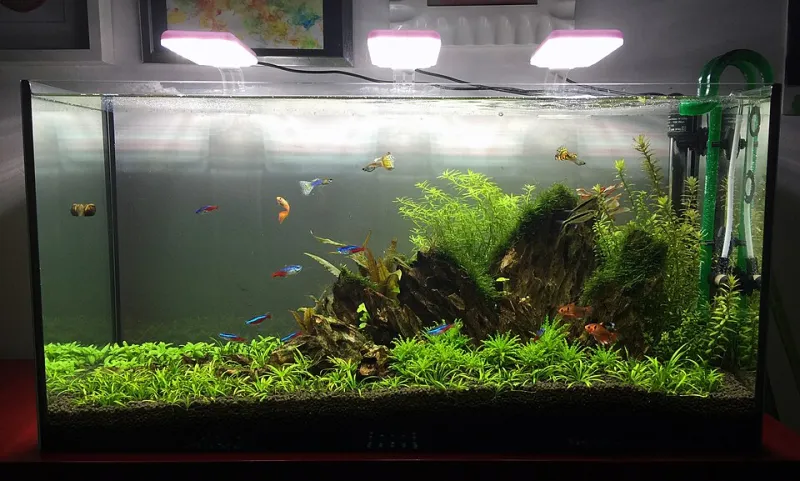
Photo: ImagePerson, CC BY 4.0, via Wikimedia Commons
Somewhere along the way, aquarium maintenance advice got weirdly prescriptive. Do a 25% water change every week. Clean your filter monthly. Test parameters every Sunday. The advice isn't wrong, exactly—but it treats every aquarium and every hobbyist as interchangeable, and they're not.
A retired hobbyist with a 125-gallon planted discus tank has a completely different maintenance reality than a working parent with a 20-gallon community setup and two kids in soccer. And a heavily stocked cichlid tank needs far more intervention than a lightly stocked, well-planted nano. Handing everyone the same schedule and calling it universal is like giving everyone the same pair of shoes and calling it a perfect fit.
Here's a more honest approach: figure out what your tank actually needs, figure out what your life actually allows, and build something at the intersection of those two things.
Start With Your Tank, Not a Template
Before you build any schedule, answer these four questions honestly:
How heavily stocked is your tank? A densely packed cichlid setup produces waste at a rate that a lightly stocked community tank doesn't. More bioload means more frequent water changes and more regular filter maintenance.
Do you have live plants? A mature planted tank with a healthy balance of fish and vegetation is genuinely more forgiving than a bare or artificial setup. Plants consume nitrates directly, acting as a biological buffer that reduces how often you need to intervene.
What's your filtration doing? Oversized filtration—running a filter rated for 75 gallons on a 40-gallon tank, for example—gives you a meaningful margin for error. Undersized filtration means parameters move faster and maintenance windows are narrower.
How stable is your tap water? In some parts of the US, municipal water is heavily treated and fluctuates seasonally. In others, it's consistent year-round. If your tap water chemistry changes, your maintenance needs change with it.
Your answers to these questions define the minimum your tank requires. Everything else is about fitting that minimum into your actual life.
Schedules for Real People
The Busy Professional (Limited Time, Consistent Availability)
You've got maybe 30–45 minutes on the weekend and a few minutes on weeknights. You're not going to do daily testing or midweek water changes—and that's fine if your setup accounts for it.
Make your setup do more of the work. Invest in a quality canister filter with a long service interval, keep your tank lightly to moderately stocked, and add live plants. An auto top-off device eliminates daily water level checks. A reliable programmable light timer removes one more manual task.
Your realistic schedule:
- Weekly: 15–20% water change, quick glass wipe, visual health check of all fish
- Monthly: Rinse filter media in old tank water, vacuum substrate, test parameters
- Quarterly: Full parameter test including GH/KH, inspect equipment, trim plants aggressively
The key is consistency over intensity. Smaller, regular water changes beat sporadic large ones every time.
The Engaged Hobbyist (Moderate Time, High Interest)
You actually enjoy spending time with your tank. Maintenance isn't a chore—it's part of the hobby. You can realistically give your aquarium 20–30 minutes several times a week.
Your realistic schedule:
- Every 2–3 days: Spot-check parameters (ammonia, nitrite during any changes), remove any dead leaves or debris
- Weekly: 25–30% water change, glass cleaning, feed assessment
- Bi-weekly: Filter rinse (alternating between mechanical and biological media), substrate vacuum
- Monthly: Full water chemistry panel, equipment inspection, plant trimming and replanting
At this level, you'll catch problems early. That's the real benefit of frequent engagement—you know your tank's baseline so well that anything off catches your attention immediately.
The Retiree or Work-From-Home Hobbyist (Flexible Time, Larger Setups)
You have time, possibly a larger tank, and the patience to do things right. The risk here is actually over-maintenance—disrupting the tank too frequently in pursuit of perfection.
Your realistic schedule:
- Daily: Quick visual check, feeding, top off evaporation loss
- Twice weekly: 15–20% water changes (smaller and more frequent is gentler than large weekly changes)
- Weekly: Spot-clean glass, remove detritus, check plant growth
- Monthly: Full filter service, complete parameter panel, equipment check
- Quarterly: Deep substrate vacuum, check for equipment wear, review stocking
With more time available, the focus shifts from efficient maintenance to observational quality. Watch your fish. Learn their behaviors. The best diagnostic tool in this hobby is knowing what "normal" looks like for your specific animals.
When Life Gets Chaotic (And It Will)
Here's what nobody talks about: every hobbyist eventually goes through a period where maintenance gets skipped. Work deadlines, family emergencies, travel, illness—life doesn't pause for your aquarium. Here's how to manage the gap without losing fish.
For a 1–2 week absence: An automatic feeder handles feeding. Ask a friend to do a single water change if you'll be gone more than 10 days. Reduce feeding volume before you leave to lower waste production. A lightly stocked, well-planted tank can often handle two weeks without significant intervention.
For a skipped week of maintenance: Don't panic, and don't try to make up for lost time all at once. A single large emergency water change after a long gap can stress fish more than the elevated nitrates you're trying to fix. Instead, do two smaller changes over 3–4 days to bring things back in line gradually.
For a longer disruption: If you know a chaotic period is coming—a move, a new baby, a demanding work project—temporarily reduce your stocking expectations. Rehome fish you can't adequately care for. A smaller bioload gives your tank dramatically more resilience.
The One Thing Every Schedule Needs
Regardless of which approach fits your life, there's one non-negotiable: a liquid test kit and the habit of using it. Parameters are the ground truth of your tank's health. Schedules are useful frameworks, but what your test results tell you should always override the calendar.
If nitrates are low after two weeks, you can wait on that water change. If ammonia appears mid-week, you act regardless of what day it is. Build your schedule around your tank's actual needs, stay flexible, and you'll find maintenance stops feeling like a burden and starts feeling like a natural part of keeping something alive and beautiful in your home.