Designing Peace: The Behavioral Science Behind Aquarium Layouts That Actually Reduce Fish Aggression

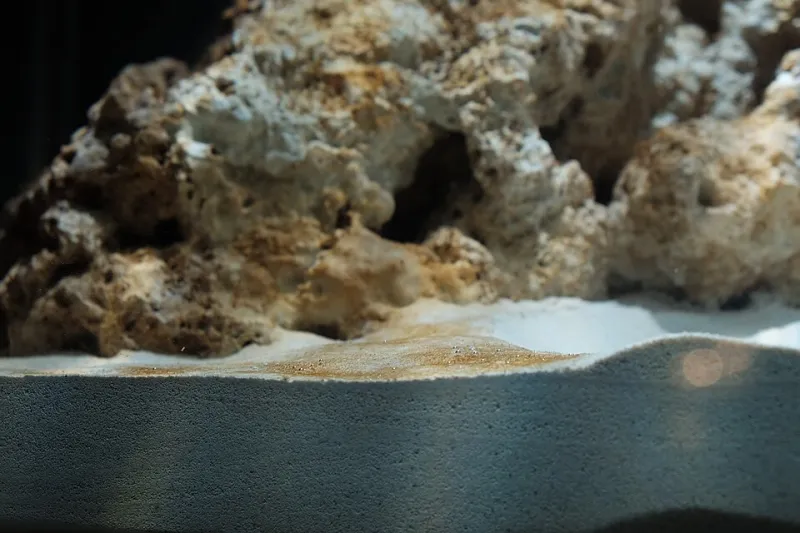
Photo by Photo by Máté Molnár on Unsplash on Unsplash
Walk into any aquarium store in the US and you'll see the same advice repeated near the cichlid tanks: "Make sure you have plenty of hiding spots." It's not wrong, exactly. But it's a bit like telling someone to "eat better" — technically sound, practically incomplete.
The relationship between aquarium decor and fish behavior runs much deeper than caves and cover. How you arrange your hardscape, where you break sightlines, how you define territories, and whether your layout gives fish the ability to establish and defend space — all of it shapes the social dynamics in your tank every single hour of every single day. Get it right, and a tank full of feisty personalities can coexist in something close to harmony. Get it wrong, and even a beautiful aquascape becomes a source of relentless stress.
The Behavioral Problem With Open Space
Fish that evolved in structurally complex environments — rivers with roots and rocks, reefs with crevices and overhangs, lakes with rocky shorelines — are hardwired to navigate in relation to structure. When you put a territorial cichlid in a tank with a single piece of driftwood and a wide open substrate, you haven't simplified its world. You've broken it.
In the wild, an open line of sight means one thing to a fish: threat. Predators are visible. Rivals are visible. There's no escape and no cover. A fish that can see every corner of its environment simultaneously is a fish that cannot relax. Cortisol — the primary stress hormone in fish — stays elevated. Immune function drops. Aggression often spikes as the fish compensates for feeling exposed by trying to dominate whatever space it can control.
This is why some of the most aggression-prone tanks hobbyists describe aren't sparsely decorated — they're actually tanks where all the decor is pushed to the back wall, leaving a wide open "display zone" in the front. It looks great to the viewer. It's a nightmare for the fish.
Sightline Breaks Are Not Optional
For any tank housing territorial species — cichlids, bettas, many loaches, a range of tetras with hierarchical tendencies — sightline interruption is a functional requirement, not a stylistic choice.
The principle is straightforward: if fish A can see fish B from anywhere in the tank, fish A will constantly monitor fish B. That monitoring costs energy and generates stress. If a rock, a dense plant cluster, or a piece of driftwood breaks that sightline, both fish can exist in the same water without being in a state of perpetual awareness of each other.
Practically, this means building your hardscape so that no single position in the tank offers a full view of the entire footprint. Tall plants midground, rocks that extend from the substrate toward the surface, driftwood placed diagonally rather than flush against the back — these aren't just aesthetic choices. They're functional dividers.
Territory Definition vs. Territory Ambiguity
Here's a counterintuitive truth about territorial fish: defined territories reduce aggression more effectively than abundant hiding spots. A fish that knows exactly where its territory begins and ends will defend it, but it won't endlessly patrol and challenge. A fish in an ambiguously divided space will fight constantly because the boundaries are never settled.
For cichlid tanks specifically, this means designing distinct zones with clear visual anchors. A large flat rock, a specific piece of driftwood, a corner heavily planted with tall stems — these become territory markers that fish will recognize and respect over time. When every inch of the tank looks the same, there's nothing for a fish to anchor a territory to, and conflict becomes constant.
The number of territories your layout can support also determines how many fish of similar temperament you can safely keep. A 55-gallon tank with three clearly defined zones can often house three territorial fish with far less conflict than the same tank with eight caves scattered uniformly across the substrate.
Species-Specific Layout Logic
Different fish use space differently, and your layout should reflect that.
Cichlids (including popular American favorites like convicts, firemouths, and jack Dempseys) are primarily horizontal territory holders. They need distinct zones at the substrate level with clear visual boundaries. Vertical elements like tall driftwood matter less to them than defined floor space.
Labyrinth fish like bettas and gouramis are surface-oriented and respond strongly to floating plants and overhead cover. A betta that can't reach the surface without passing through open water is a stressed betta. Dense floating plants create a sense of security at the surface that changes their behavior noticeably.
Loaches and bottom-dwellers like yo-yo loaches or clown loaches are highly sensitive to the availability of enclosed spaces. They don't just hide in caves — they actively establish caves as social sleeping and resting spots. Providing fewer caves than there are fish often leads to pile-ons that look cute but actually reflect resource competition.
Schooling tetras and barbs don't hold individual territories, but they do need enough visual complexity to feel secure. A sparse tank causes schooling fish to compress their movement into a tight, anxious cluster rather than ranging naturally through the water column.
The Redesign Trap
One thing worth mentioning: changing your layout too frequently can be just as destabilizing as a poor layout. Once territorial fish have established boundaries in relation to existing hardscape, rearranging everything resets those boundaries to zero — and you'll often see a spike in aggression as territories are re-established.
This is actually a useful tool when you're introducing new fish into an established tank. A full rearrangement before the introduction levels the playing field and prevents the existing fish from defending already-established territory against the newcomer. But outside of that specific context, stability in your layout is a form of welfare for your fish.
Designing With Intention
The takeaway isn't that you need a PhD in fish behavior to set up a good tank. It's that decor decisions deserve the same intentionality as water chemistry decisions. Before you place that next piece of hardscape, ask yourself: does this break a sightline? Does it define a zone? Does it give a specific species the kind of cover it's actually wired to seek?
A layout designed around how your fish experience space — rather than how it looks from the front glass — is one of the most effective welfare interventions you can make. And as a bonus, tanks designed this way tend to look more natural and dynamic anyway. The fish move through them with purpose instead of anxiety, and that's genuinely more interesting to watch.