The Foundation Beneath Everything: Why Your Substrate Choice Should Be the First Decision You Make
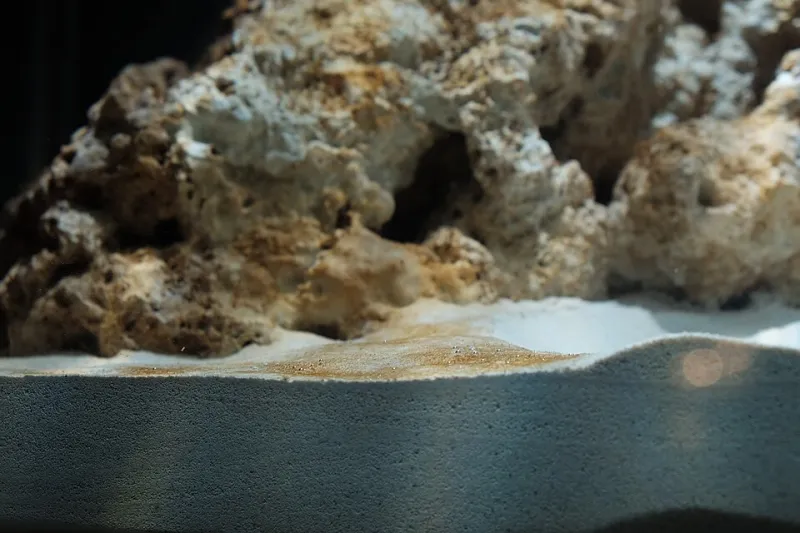
Photo: kerinin, CC BY-SA 2.0, via Wikimedia Commons
There's a sequence most new aquarists follow when setting up a tank. Pick the fish you want. Pick a tank size that fits the space. Buy some gravel that looks nice. Add water, cycle it, and start stocking. The substrate — that layer of material covering the bottom — is treated as scenery. Cosmetic. Interchangeable.
I'd argue that's one of the most consequential mistakes in the hobby, and it's almost universally made.
Substrate isn't decoration. It's infrastructure. The material you put on the bottom of your tank will influence your water's pH, hardness, and mineral content. It will determine where and how beneficial bacteria colonize your system. It will either support or undermine any plants you try to grow. And it will shape the behavioral patterns of your fish in ways that directly affect their health and stress levels. Getting it wrong doesn't just mean an aesthetic you don't love — it means fighting your tank's chemistry for years.
What Substrate Actually Does (That Nobody Explains)
Let's start with chemistry, because it's the most immediately impactful and the least intuitive.
Calcium-based substrates — crushed coral, aragonite sand, certain types of "natural" aquarium gravel — dissolve slowly in water, releasing calcium and carbonate ions. This raises both pH and general hardness (GH) over time. If you're keeping African cichlids or shell dwellers that naturally come from hard, alkaline lakes like Tanganyika or Malawi, this is exactly what you want. Your substrate is doing chemistry work for you passively, around the clock, without any additives.
But put those same substrates in a tank where you're trying to keep soft-water tetras from the Amazon, or grow CO2-injected aquatic plants that thrive in a lower pH range, and you're constantly fighting uphill. No amount of RO water or pH-down product can fully overcome a substrate that's continuously buffering your water in the wrong direction.
Inert substrates — plain silica sand, most black aquarium sands, and many commercial "natural" gravels — don't alter chemistry at all. They're genuinely neutral, which makes them flexible but also means they offer no buffering support for species that need specific water parameters.
Active or "buffering" substrates, like ADA Aqua Soil and its many competitors, work in the opposite direction from crushed coral. They actively lower pH and soften water, creating ideal conditions for soft-water plants and fish. They're the gold standard for planted tank hobbyists running high-tech setups — but they're not permanent. Most active substrates exhaust their buffering capacity within one to three years, at which point your tank chemistry will shift. That's not a flaw, exactly, but it's something you need to plan for.
Bacteria Live Here Too
Your biological filter gets most of the credit for ammonia processing, but substrate is a significant secondary site for bacterial colonization — particularly in tanks with fine-grained substrates and healthy plant root systems.
Fine sand, especially when seeded with beneficial bacteria and left undisturbed, develops complex microbial communities that contribute to nutrient cycling. This is part of why heavily planted tanks with fine substrate and dense root systems can maintain water quality that seems almost disproportionate to the size of their filter — the substrate itself is doing meaningful biological work.
Coarser gravel, by contrast, allows food and waste to fall between the gaps and accumulate in oxygen-poor pockets where anaerobic bacteria dominate. Those bacteria produce hydrogen sulfide as a byproduct — a toxic gas that can release into the water column when the substrate is disturbed. It's the reason experienced hobbyists often warn against deep, coarse-gravel substrates without regular vacuuming: you can be sitting on a slow-release toxin factory and not know it until you rearrange your hardscape.
Plants Don't Grow in Gravel — Not Really
If you're planning any kind of planted tank, substrate choice isn't a preference — it's a prerequisite. Most aquatic plants are root feeders to varying degrees, meaning they draw significant nutrition from the substrate directly. Pretty gravel is essentially sterile from a nutritional standpoint. Planting into it is the aquatic equivalent of growing vegetables in pure sand.
Nutrient-rich substrates — whether commercial products like Fluval Stratum, UNS Controsoil, or Seachem Flourite, or DIY mixes incorporating laterite or garden soil — give plant roots something to actually work with. The difference in growth rate and plant health between an inert substrate and a nutrient-rich one is not subtle. It's dramatic, and it becomes apparent within weeks.
Root tabs can supplement an inert substrate, and they work reasonably well for individual plants. But they're a workaround, not a solution. You're essentially compensating for a substrate that wasn't designed for the job. If plants are part of your vision, commit to a proper planting substrate from the start — retrofitting it later means tearing down your tank.
Your Fish Are Living On It
Substrate affects fish behavior in ways that are easy to overlook until you see the contrast. Corydoras catfish, a staple of US community tanks, naturally sift through fine sand substrate, using their sensitive barbels to search for food. Keep them on coarse gravel and those barbels wear down, become infected, and the fish become visibly stressed. It's not an edge case — it's one of the most commonly reported health problems in cory keepers, and the fix is almost always switching to a softer, finer substrate.
Golden dojo loaches, kuhli loaches, and many other burrowing species have similar requirements. Cichlids that naturally excavate — and there are many — need substrate they can actually move. Certain bottom-dwelling fish use substrate color as a behavioral cue; on very light substrate, dark-colored fish often appear washed out and stressed because they're trying to camouflage and can't.
These aren't minor quality-of-life issues. Chronic stress suppresses immune function, increases susceptibility to disease, and shortens lifespans. The substrate your fish live on every minute of every day matters.
The Argument for Deciding First
Here's the practical takeaway: substrate should be chosen before you finalize your fish list, not after. Start with the question of what kind of water chemistry you want to maintain, what plants (if any) you're committed to, and what behavioral needs your target species have. Let the substrate answer to those requirements. Then build your stocking list, your hardscape, and your equipment choices around the foundation you've established.
It's a different way of thinking about tank setup — bottom-up instead of top-down. But it's the approach that produces tanks that actually work with their own chemistry instead of against it. And in a hobby where so many problems trace back to mismatched parameters and struggling plants, getting the foundation right from day one is the single highest-leverage decision you can make.